Osaka Sumo on a Sacred Ring: Kaminari Ichimon Show Review
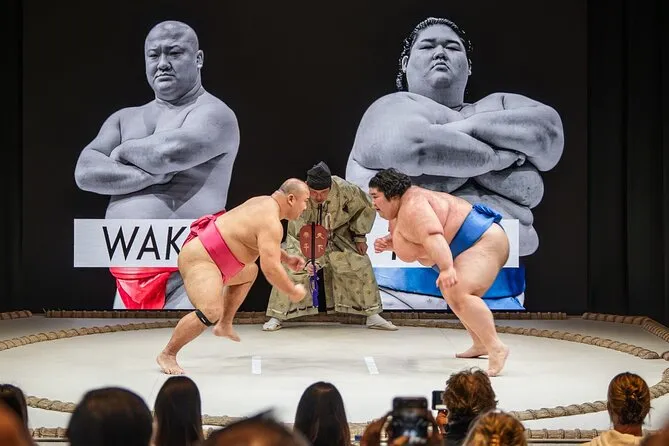
Most sumo shows in Osaka give you the spectacle — this one gives you the theology. The Kaminari Ichimon experience is built around a pro-grade sacred dohyo: real former professional rikishi perform on a ring consecrated in the traditional way, while an English guide walks the audience through sumo's 1,500-year link to Shinto, its ranking system and its rarely-explained pre-bout rituals. You can put on a real mawashi and enter the ring, then take photos with the wrestlers afterward. Five-star average from 34 reviews, and climbing. (Comparing all the options? See sumo shows in Osaka on our homepage.)
About This Activity
Skip the queue — go straight to the dohyo
Souvenir included with your booking
90-minute show with mawashi try-on and photos
Professional-grade ring consecrated in the traditional Shinto rite
History, rituals, rankings and kimarite — all explained
34 reviews, all five stars
Check Live Availability & Prices
Real-time dates and prices for the Kaminari Ichimon sumo experience on Osaka's sacred dohyo — book via GetYourGuide with fast-track entry and free cancellation up to 24 hours before.
Why the Sacred Ring Changes the Sumo Experience
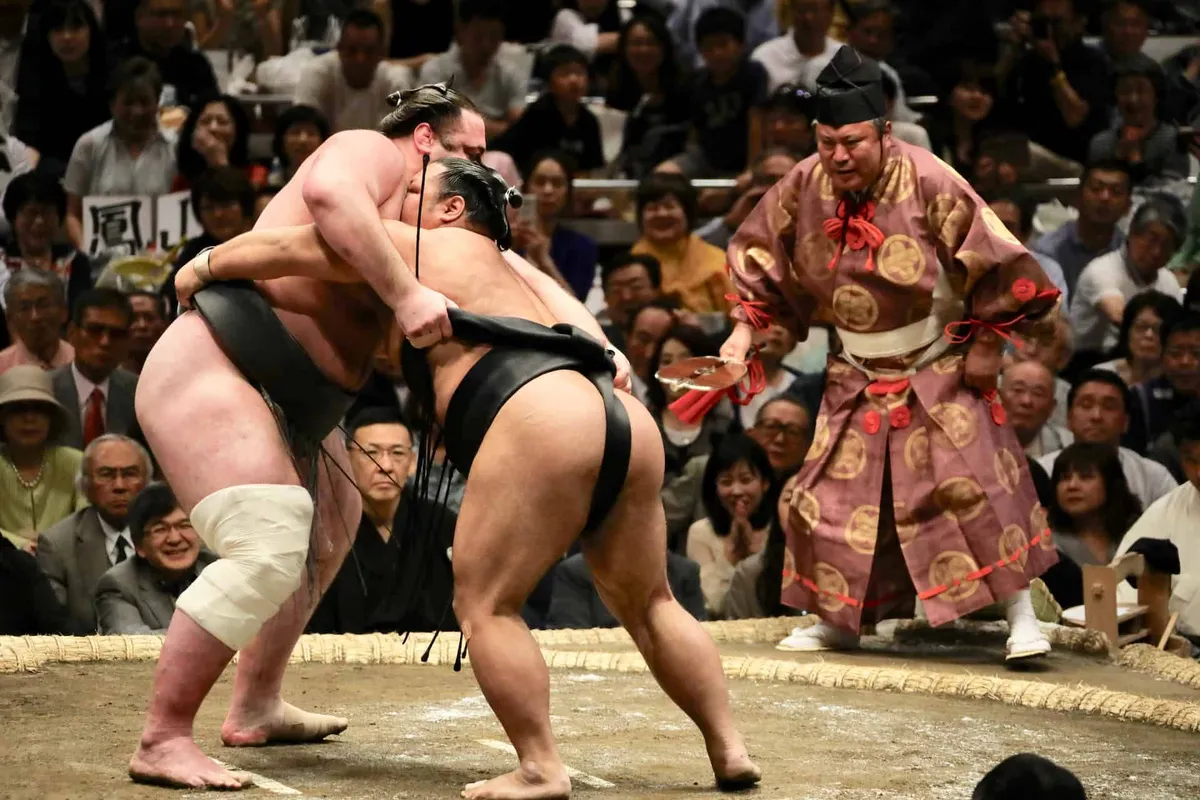
In professional sumo, the dohyo is not just a stage — it is a sacred space. Before every tournament, a Shinto ceremony (dohyo-matsuri) consecrates the ring: salt, kelp, dried squid and chestnuts are buried at its centre, and a purification rite is performed by a gyoji (referee-priest). The bouts that follow are acts of offering as much as competition.
Kaminari Ichimon is one of the very few sumo shows in Osaka that uses a dohyo built to professional specifications and consecrated in the traditional way. Stepping onto that ring — even as a tourist — carries a different weight than stepping onto a stage prop, and the English commentary makes sure you understand exactly why.
On top of the ritual context, the performers are former professional rikishi from the Japan Sumo Association's ranked divisions. This is not a show designed by a marketing team; it is run by people who lived the sport. For travelers who want to understand sumo rather than simply watch it, this is the standout sumo experience in Osaka.
An Authentic Sumo Experience in Osaka
What the Show Covers
The 90-minute programme is structured around sumo's layers, not just its athletics:
- Sumo's 1,500-year history: from Shinto offering to the formalised professional sport of today
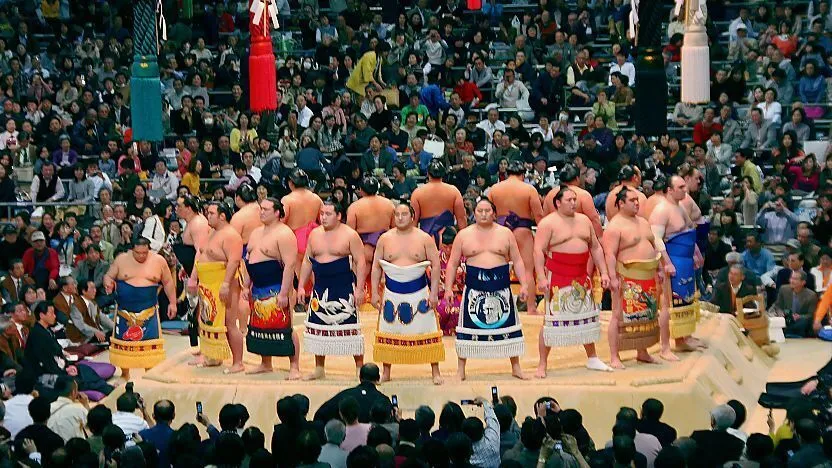
- Rankings and the banzuke: how wrestlers progress from jonidan to yokozuna, and what each rank means
- Pre-bout rituals: the meaning behind leg-stomping (shiko), salt-throwing, ring-stamping and the referee's fan
- Kimarite demonstrations: the 82 official winning techniques shown live by former professionals
- Live bout on the sacred dohyo: a full match with the consecrated ring ceremony
- Mawashi try-on: put on a real sumo mawashi and enter the dohyo
- Photo session: in-ring photos with the wrestlers in full professional dress
The free sumo gift included with every booking is a small additional touch — a souvenir that varies by session, typically sumo-related merchandise or illustrated print.
What's Included
Your booking covers:
- Fast-track entry to the 90-minute sumo show
- Live performance by former professional rikishi on a sacred, pro-grade dohyo
- Full English commentary on sumo history, rituals, rankings and techniques
- Mawashi try-on and dohyo entry for participants
- In-ring photo session with the wrestlers
- A free sumo souvenir gift
Not included
Meals and drinks are not provided. The mawashi try-on is included — wear comfortable clothing underneath. The free gift is given on the day and varies by session.
How the Show Works — From Entrance to Photos
The programme flows in a logical arc from context to action to participation:
- Fast-track arrival: collect your ticket and enter without queuing
- Opening history: the MC opens with sumo's Shinto origins and how the sport evolved over 1,500 years
- Rankings walkthrough: understanding the banzuke (ranking sheet) and the career path of a rikishi
- Ritual demonstrations: shiko, salt ceremony, ring-stamping — each explained before it is performed
- Kimarite techniques: the wrestlers demonstrate official winning moves from slow motion to full speed
- Sacred dohyo bout: a live match on the consecrated ring, complete with the full pre-fight ceremony
- Mawashi try-on: participants put on a real mawashi and step onto the dohyo
- Photo session and souvenir gift distribution
Important Things to Know
Details to have before you arrive:
- Book ahead — the small group format and perfect rating mean sessions fill quickly
- The mawashi try-on is available to all participants; wear comfortable, flexible clothing
- The Shinto commentary is detailed — if you have questions before or after, the English-speaking guide welcomes them
- The free gift is distributed at the end of the session, not at entry
- Confirm the meeting point in your booking confirmation — the venue may differ from session to session
The perfect 5.0-star rating (34 reviews at time of writing) reflects a show that runs exactly as described. First-time or repeat visitors to sumo shows in Japan consistently rate it as the most educational experience available.
Where the Show Is Held
Who This Experience Is (and Isn't) For
Ideal for:
- Visitors who want the historical and Shinto context behind sumo, not just the spectacle
- Sumo enthusiasts who want to see professional-grade technique explained at close range
- Anyone who wants to wear a mawashi and stand on a consecrated dohyo
- Small groups or couples who prefer a more intimate, thoughtful show format
Less suited to:
- Large groups who need easy walk-in availability (book well ahead for this one)
- Visitors who want a loud, crowd-pleasing entertainment format over depth and ritual
- Those looking for a casual drop-in experience — the small group size means slots are limited
Osaka Sacred Dohyo Sumo Experience FAQ
What makes a sumo dohyo 'sacred'?
Before every official tournament, a Shinto purification ceremony (dohyo-matsuri) is performed over the ring. A gyoji (the referee who also serves a priestly role) buries offerings — salt, kelp, squid and chestnuts — at the centre and recites prayers. The ring is then sealed with clay. Not every tourist sumo show uses a ring built and consecrated this way; the Kaminari Ichimon show does.
Are these genuine professional wrestlers?
Yes. Kaminari Ichimon is run by former professional rikishi from the Japan Sumo Association's ranked divisions. These are athletes who competed in professional sumo — not performers trained for tourist shows. The difference in technique and presence is immediately visible.
Can I actually enter the dohyo?
Yes. The mawashi try-on and dohyo entry are part of the programme. You put on a real sumo mawashi, step onto the sacred ring and take photos with the wrestlers. The guide explains the significance of what you're standing on before you step up.
What is a mawashi?
The mawashi is the thick silk or cotton belt worn by sumo wrestlers — the only clothing in a professional match. Junior wrestlers wear a cotton version; upper-division rikishi wear silk. It is wrapped tightly around the waist and between the legs. Wearing one gives you a direct physical sense of how sumo practitioners carry their weight and move.
Why does this show have a perfect 5.0 rating?
The reviews consistently cite the depth of the English commentary (history, rankings, rituals — not just 'big wrestlers hit each other'), the quality of the former professionals performing, and the dohyo experience as the combination that sets it apart. With 34 reviews at a perfect score, the pattern is consistent.
How is this different from the main Osaka Sumo Experience show?
The main show is the most popular and has the broadest appeal — high energy, English MC, audience ring challenge. This Kaminari Ichimon show is smaller, quieter and goes deeper into Shinto ritual and sumo's history. The dohyo is professionally consecrated. Both have genuine former professionals. The choice depends on whether you want entertainment or education as the primary mode.
What Visitors Say
The commentary on sumo's Shinto roots was something I hadn't expected and couldn't find anywhere else in Osaka. The wrestlers were clearly professionals — not performers — and stepping onto the sacred dohyo at the end was genuinely moving. A perfect experience.
Five stars without question. I've attended a live tournament in Tokyo and this filled in everything I didn't understand during it — why the salt is thrown, what the ranking system means, what the referee is actually doing. The mawashi try-on was a highlight I didn't expect to enjoy as much as I did.
We were a group of four and all of us were struck by how educational and respectful the whole experience felt. The English guide knew sumo deeply — you could tell this wasn't a scripted tourist talk. Outstanding.